S.
Ship of Theseus
Patient
- Melcher Media (packager)
- Mulholland Books (publisher)
- Bad Robot
Treatment
- Design
- Artifact creation
Diagnosis
S. is the first novel conceived by film maker J. J. Abrams and written by Doug Dorst, envisioned as a literary mystery box. From the back cover: “One book. Two readers. A world of mystery, menace, and desire. A young woman picks up a book left behind by a stranger. Inside it are his margin notes, which reveal a reader entranced by the story and by its mysterious author. She responds with notes of her own, leaving the book for the stranger, and so begins an unlikely conversation that plunges them both into the unknown. The book: Ship of Theseus, published in 1949, the final novel by a prolific but enigmatic writer named V.M. Straka, in which a man with no past is shanghaied onto a strange ship with a monstrous crew and launched onto a disorienting and perilous journey.”
• 6 x 9.25 • black foil stamped slipcase sealed shut with a sticker • debossed hardcover case with library sticker • 472 pages, 4-color hardcover book • 20 pieces of inserted miscellanea
Product photos by Sam Fritch
Accolades
- Communication Arts Design Annual
- Graphis Design Annual 2015, Platinum Award
- How’s International Design Annual 2015, Outstanding Achievement
- Print’s Regional Design Annual 2014
0:00 / 0:00
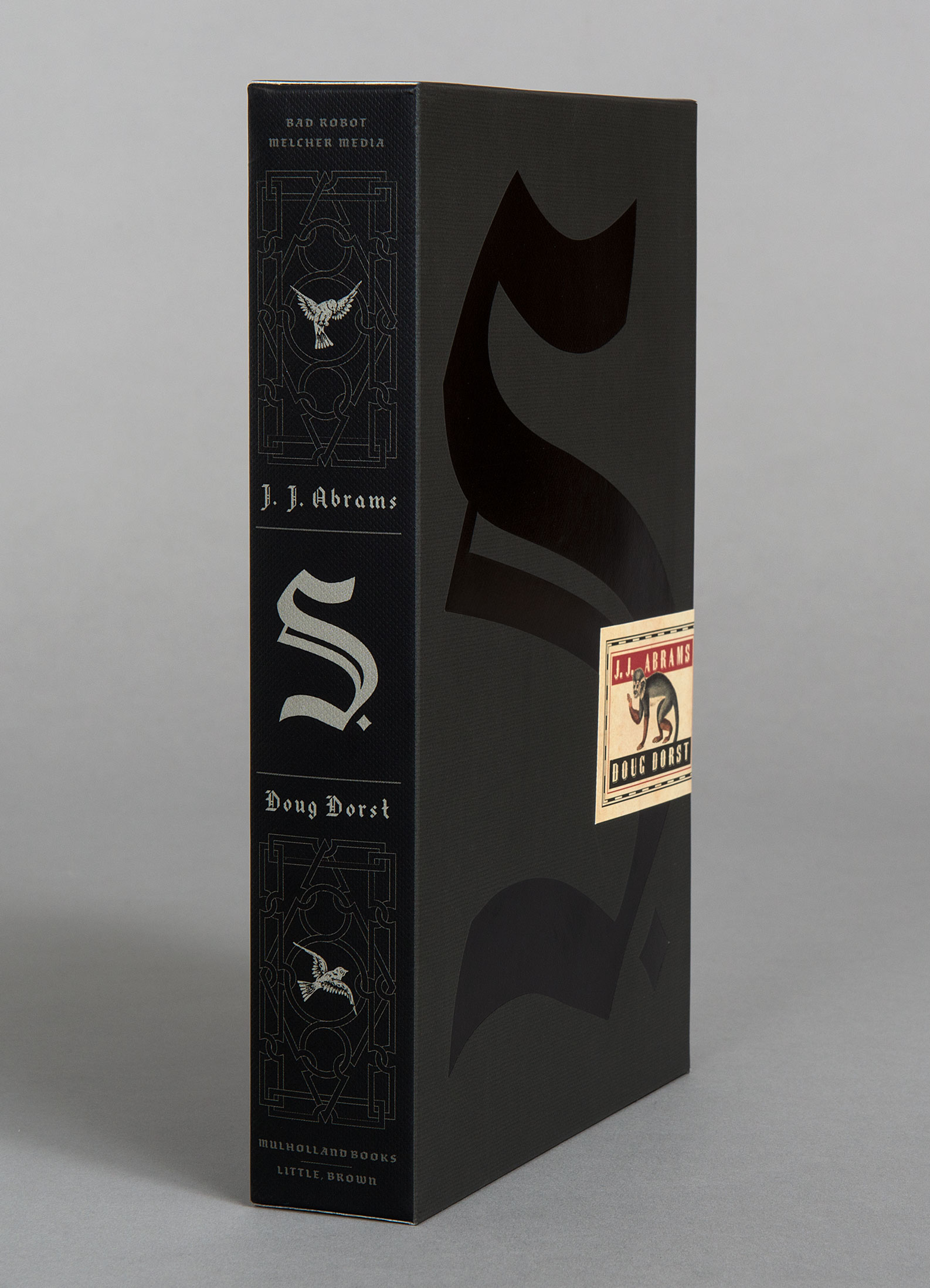
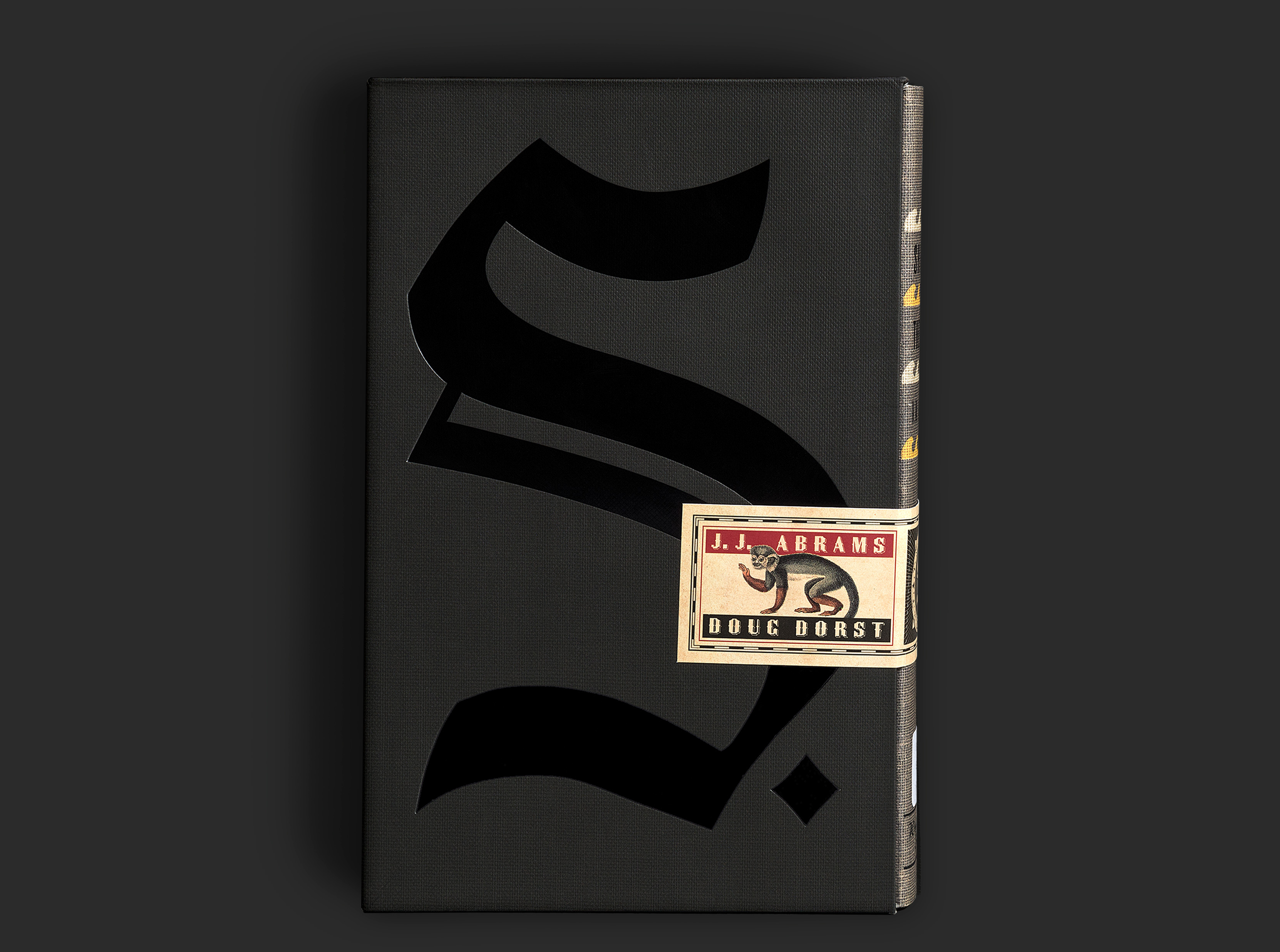
The design of the outer slipcase is reflective of the medieval origins of the secret society “S.” Birds are a theme throughout the book, and here they represent the two main characters in the book. The black-on-black effect provides intrigue to entice the reader into the mystery-box that is S.
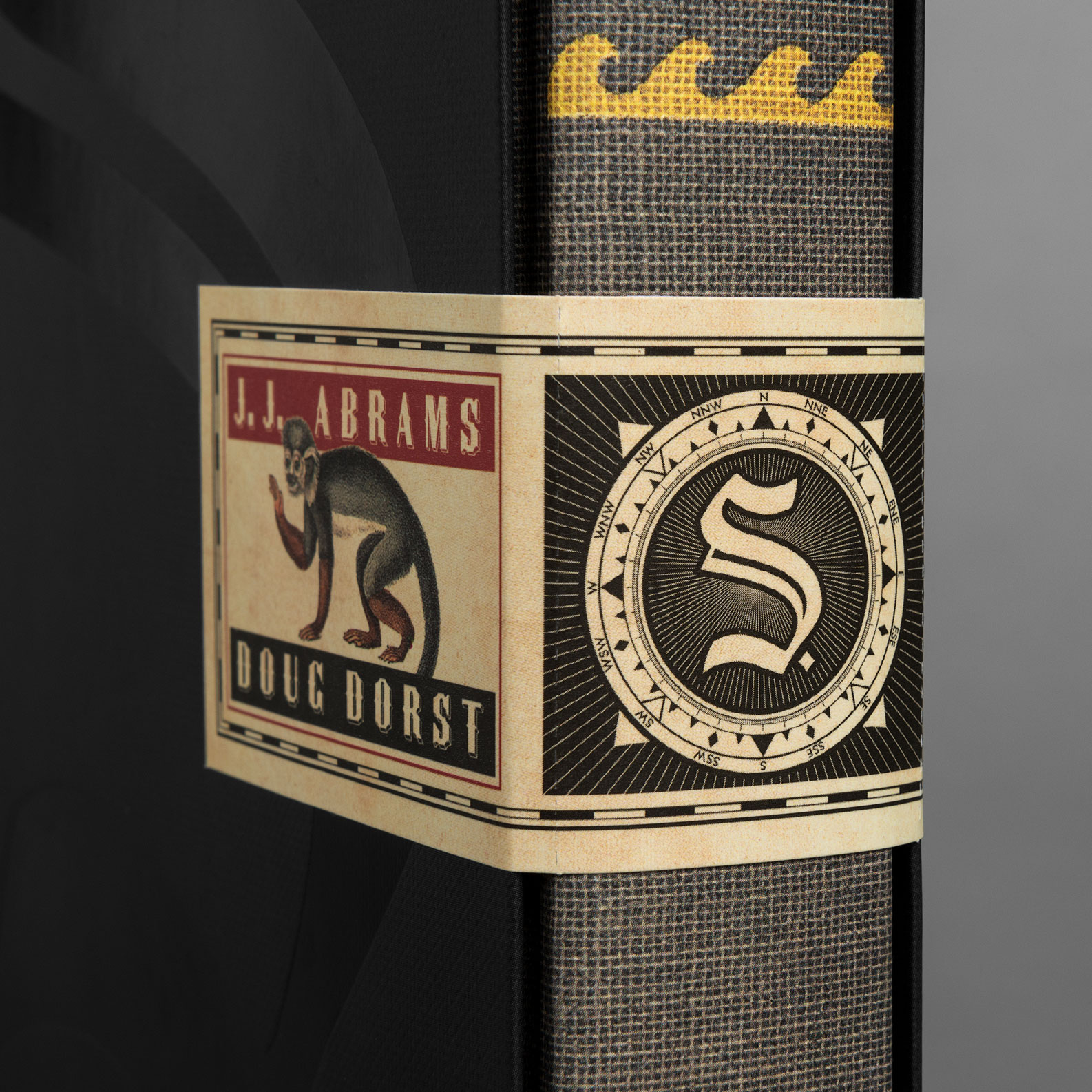
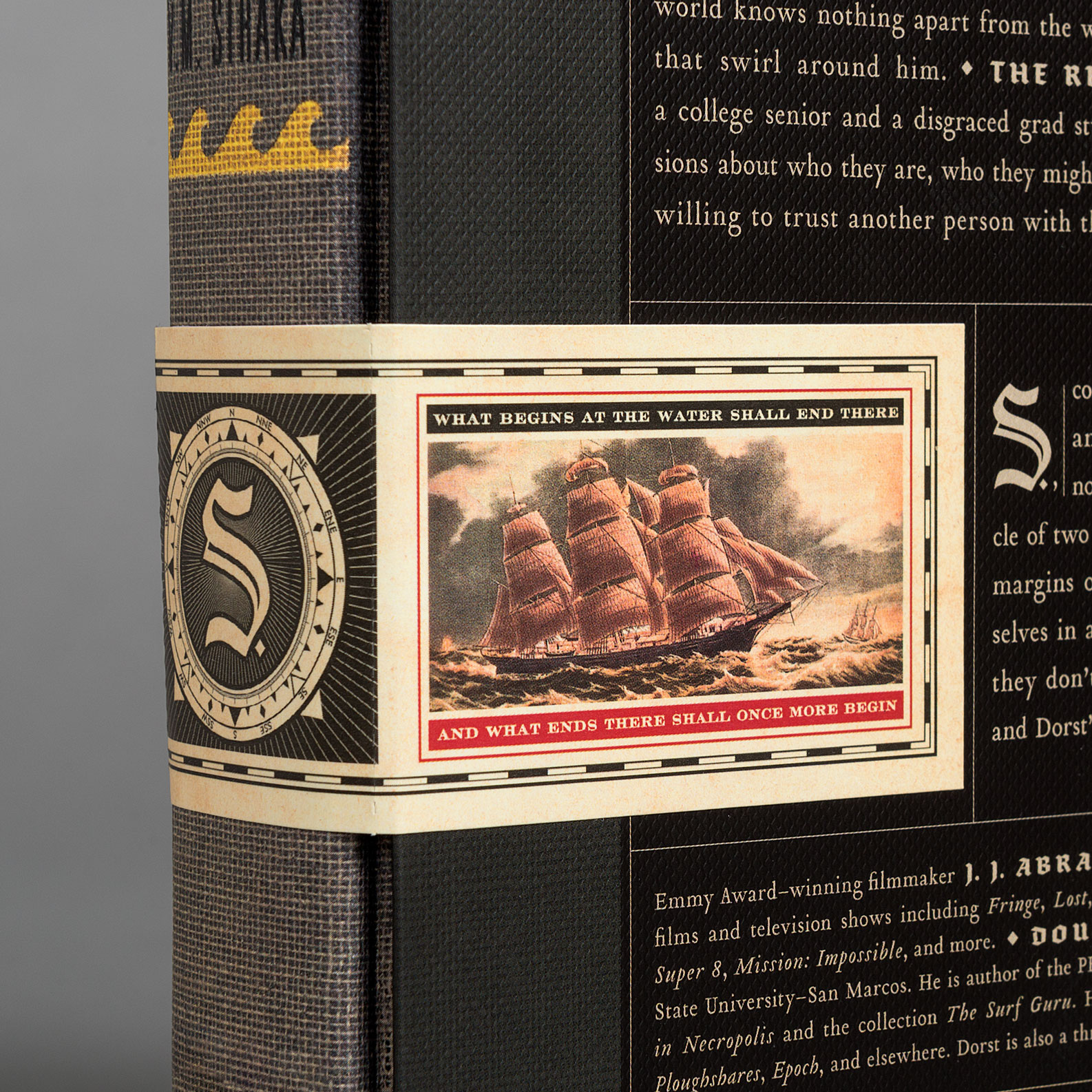
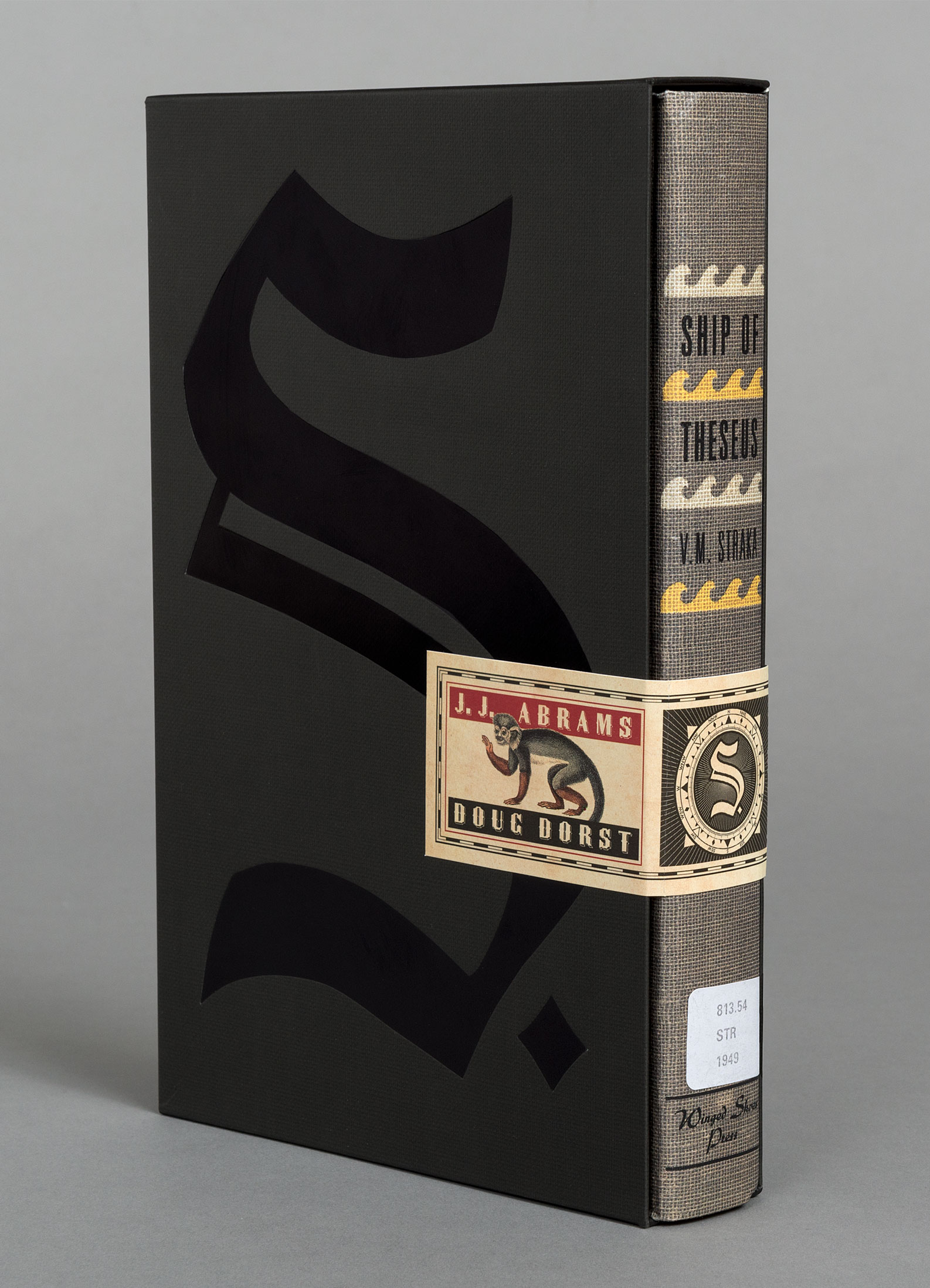
A wraparound sticker seals the slipcase shut, so the reader has to break the seal to get the book out — furthering anticipation as to what’s inside.
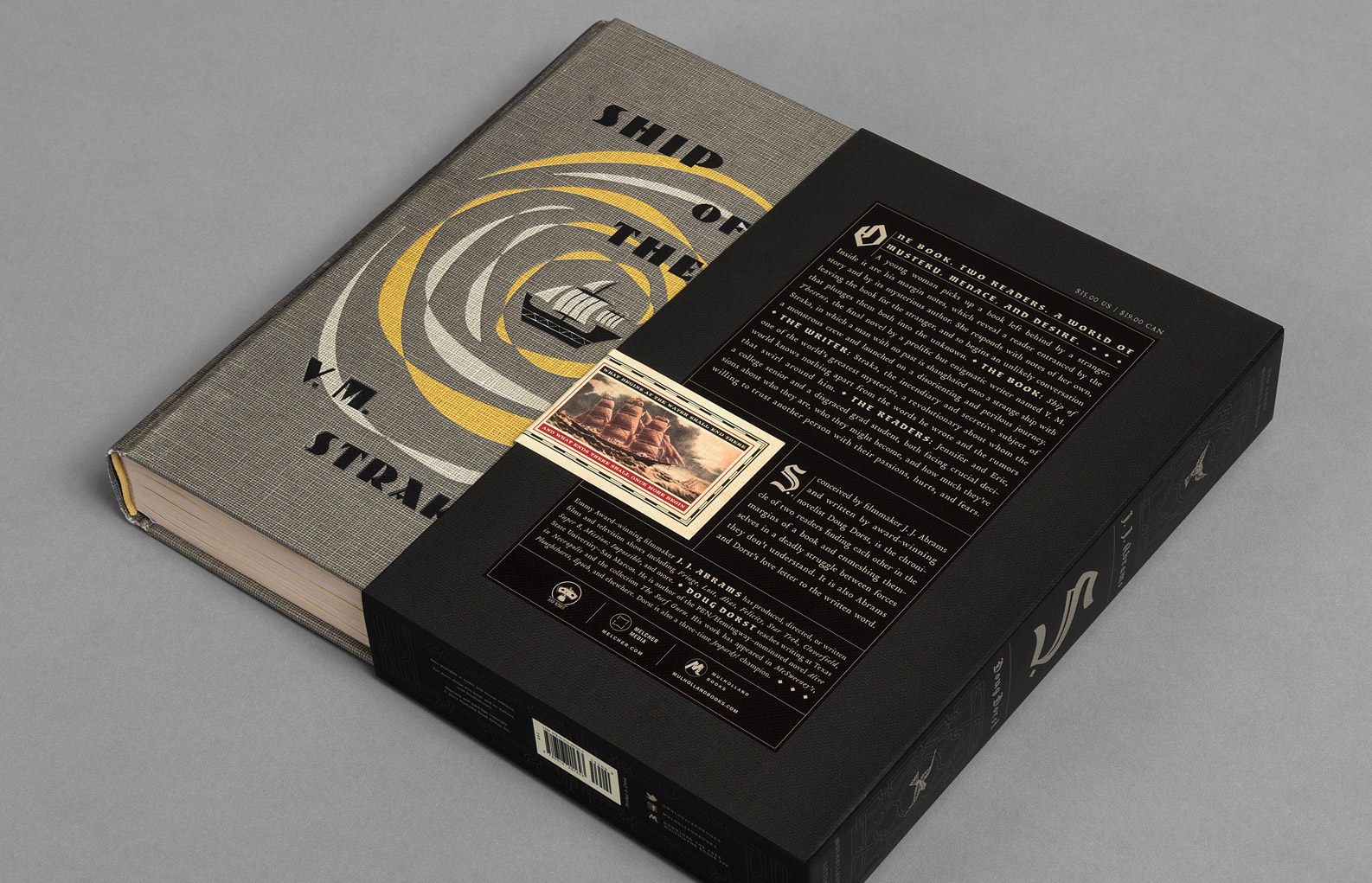
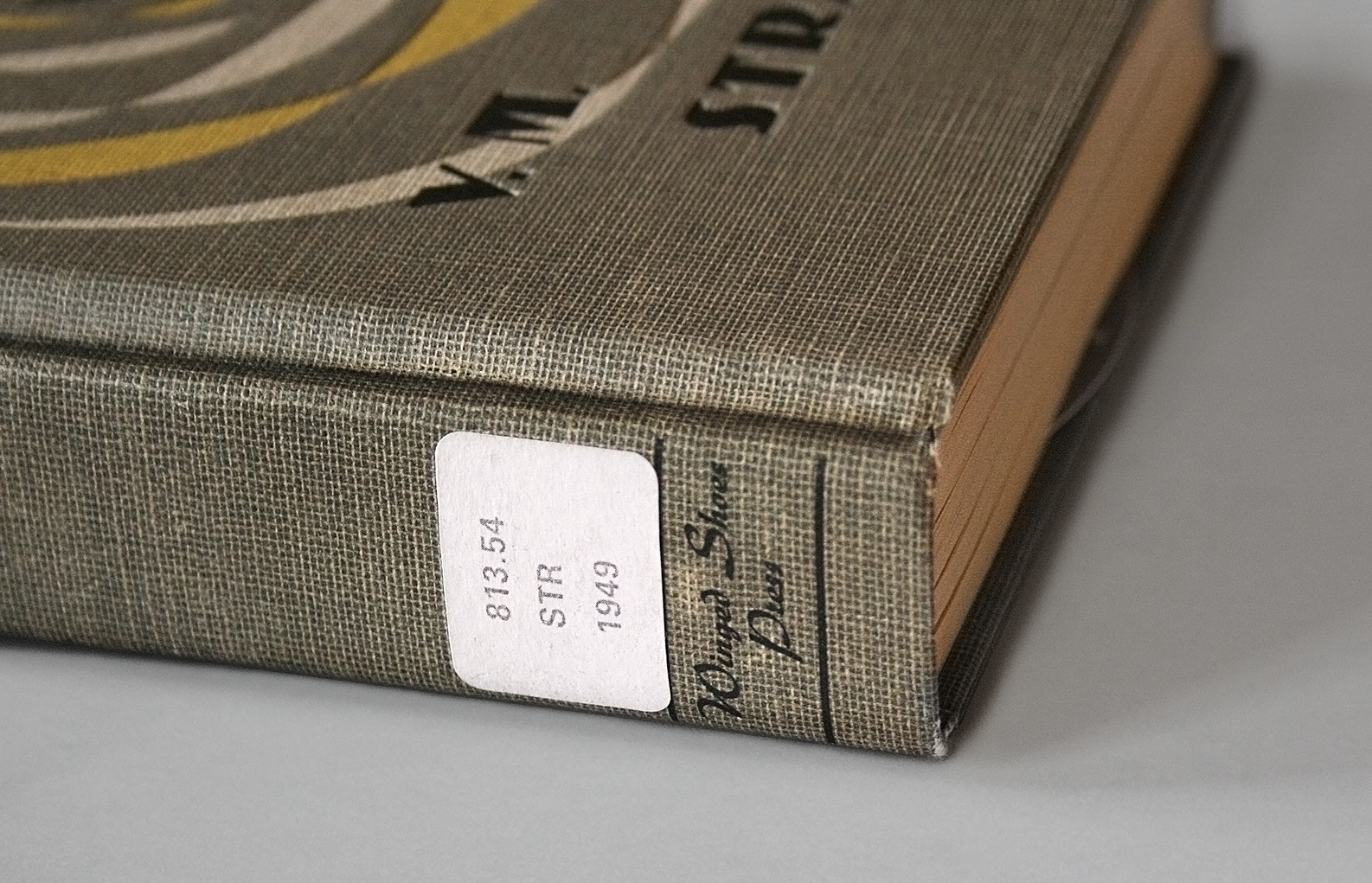
A tattered ’40s-era library book named Ship of Theseus by the mysterious V. M. Straka is revealed, complete with an actual library call number sticker on the spine.

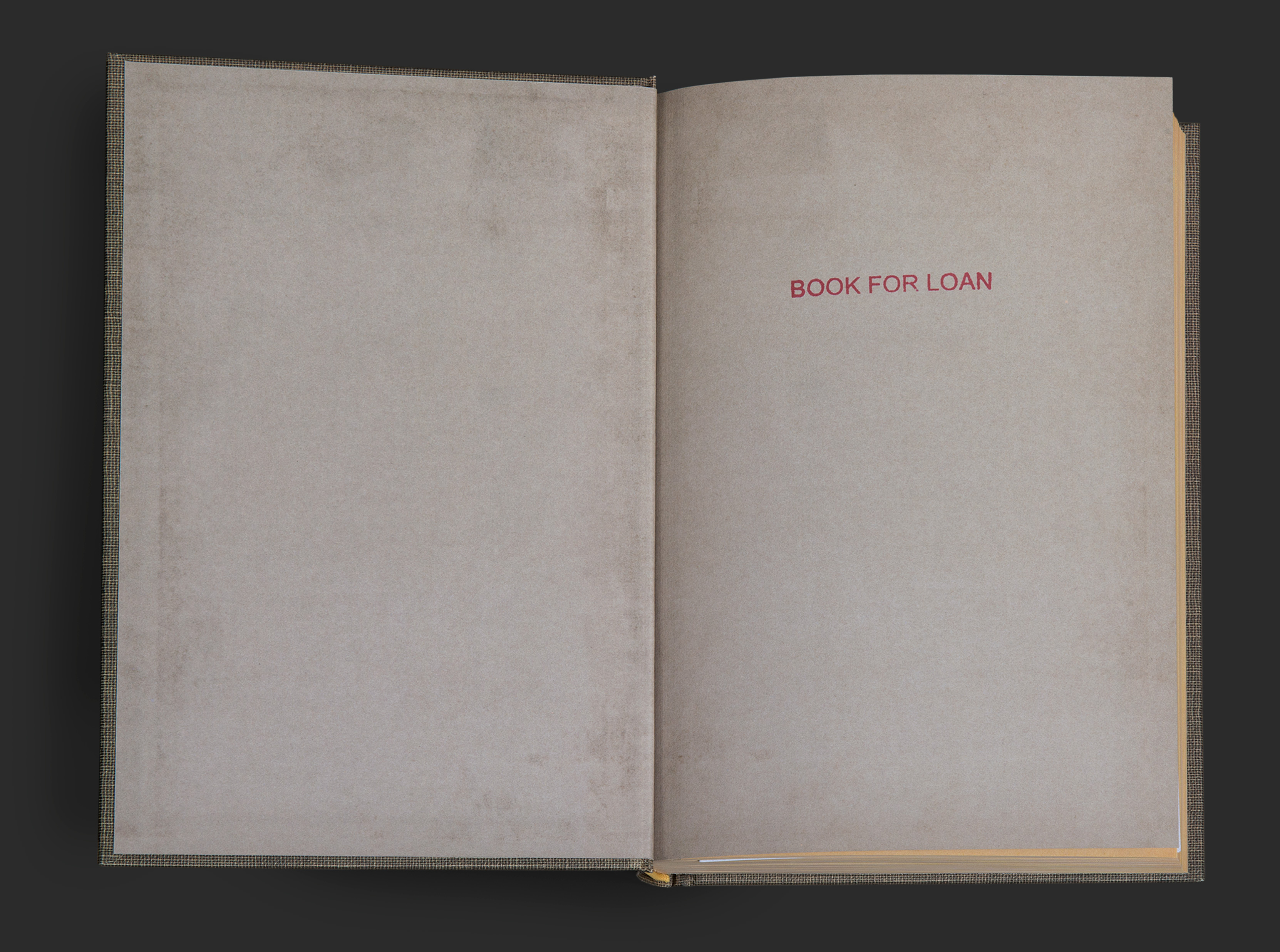
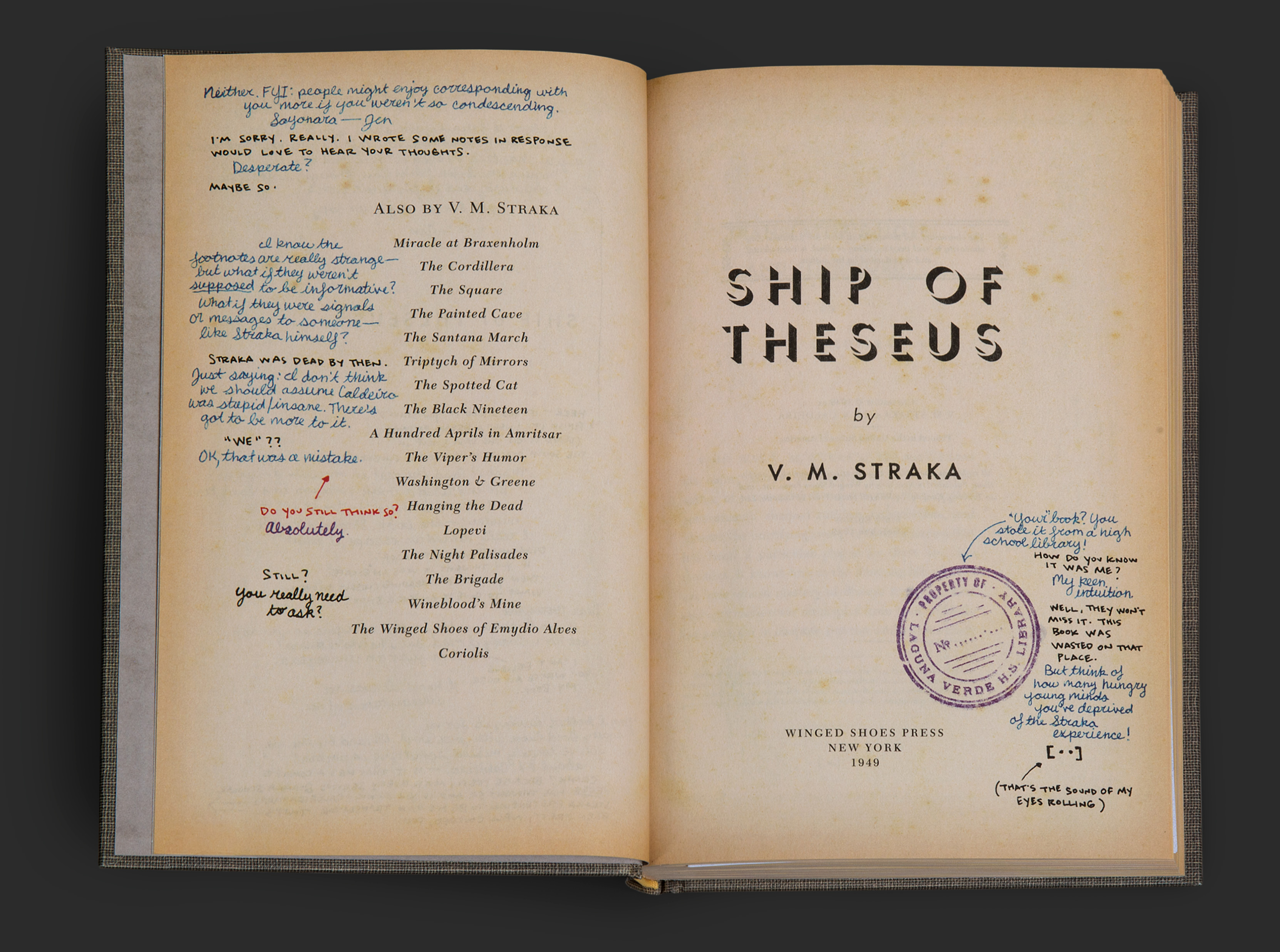
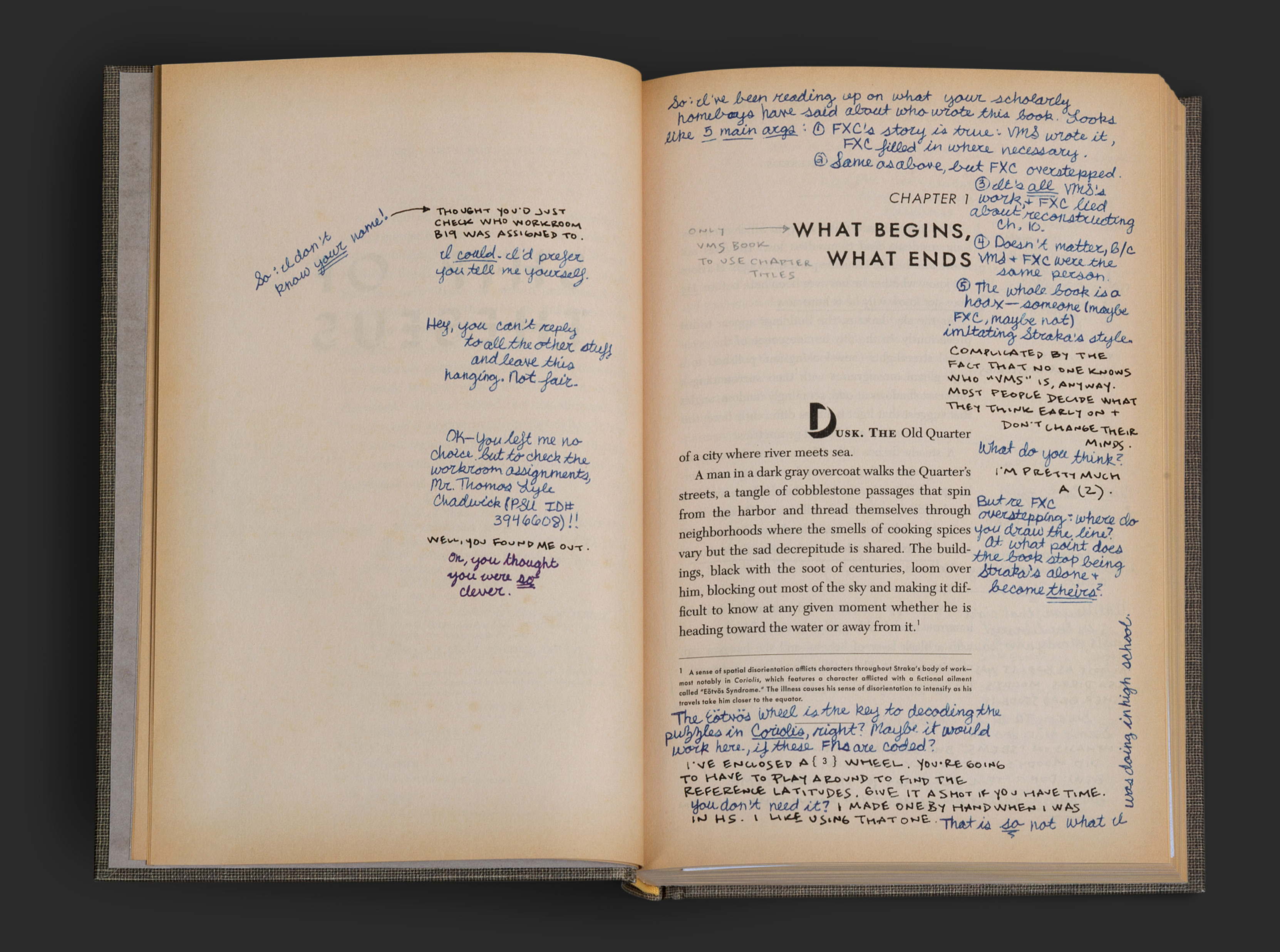
Upon opening, you discover that the book has been heavily annotated — the handwriting in the margins tells the story of the two college students. The stolen book is used as a communication device between the students as they pass it back and forth.
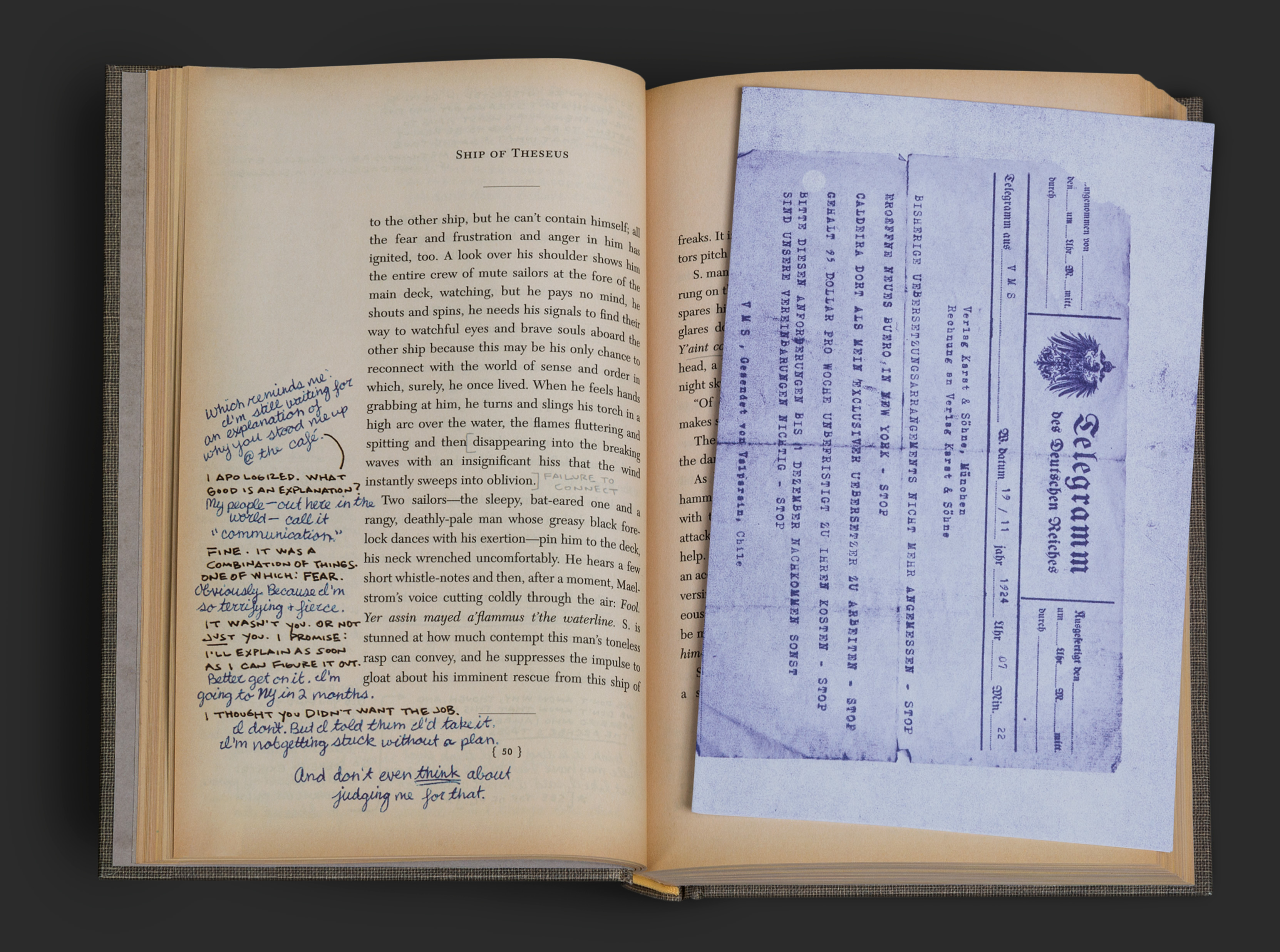
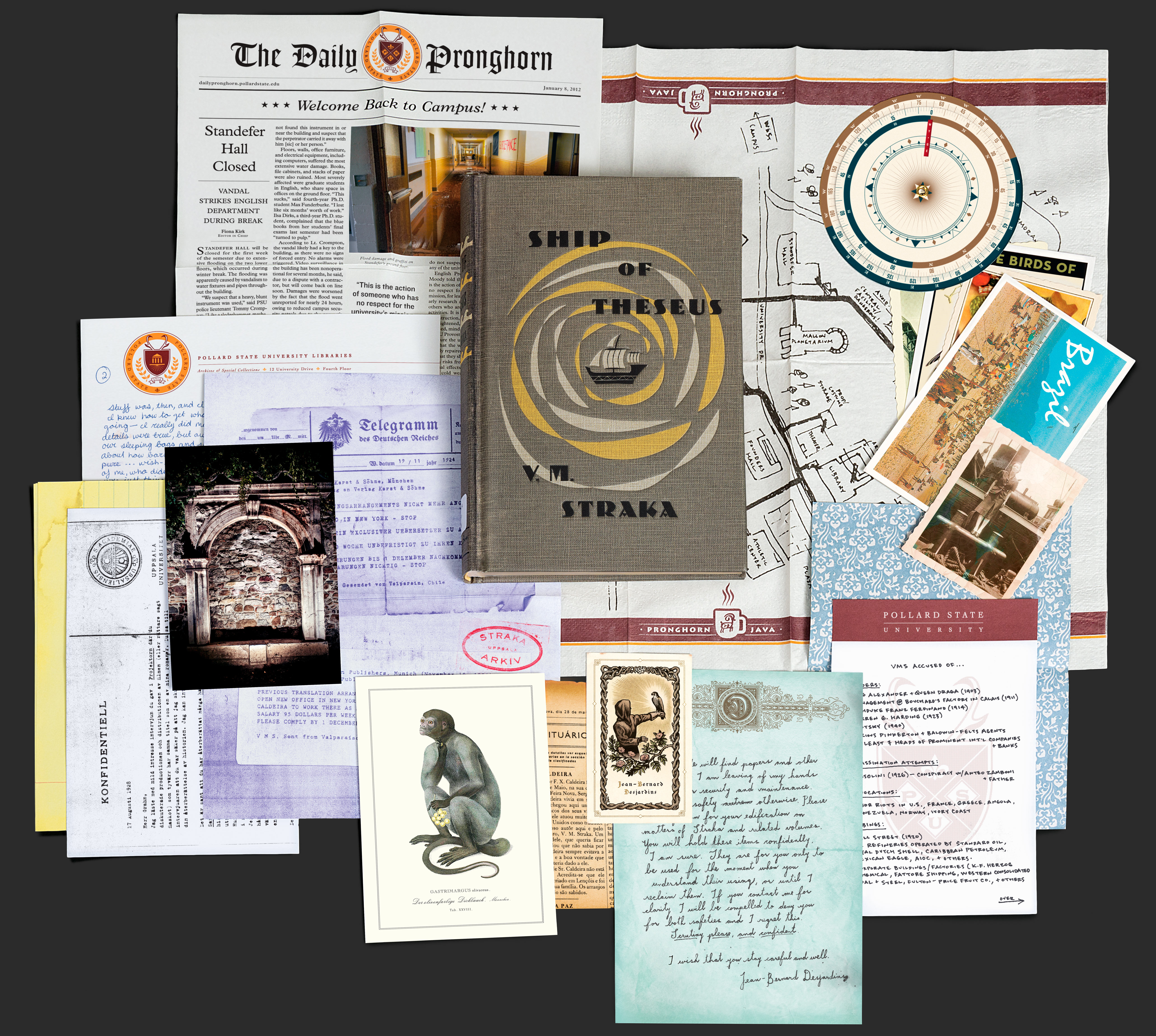
Tucked inside the pages of the book are 20 plus pieces of removable ephemera which provide clues and sub-stories. Included are mimeographed telegrams, photos, postcards, letters, a college newspaper, a map drawn on an actual napkin, a funeral card, and Xeroxed documents.
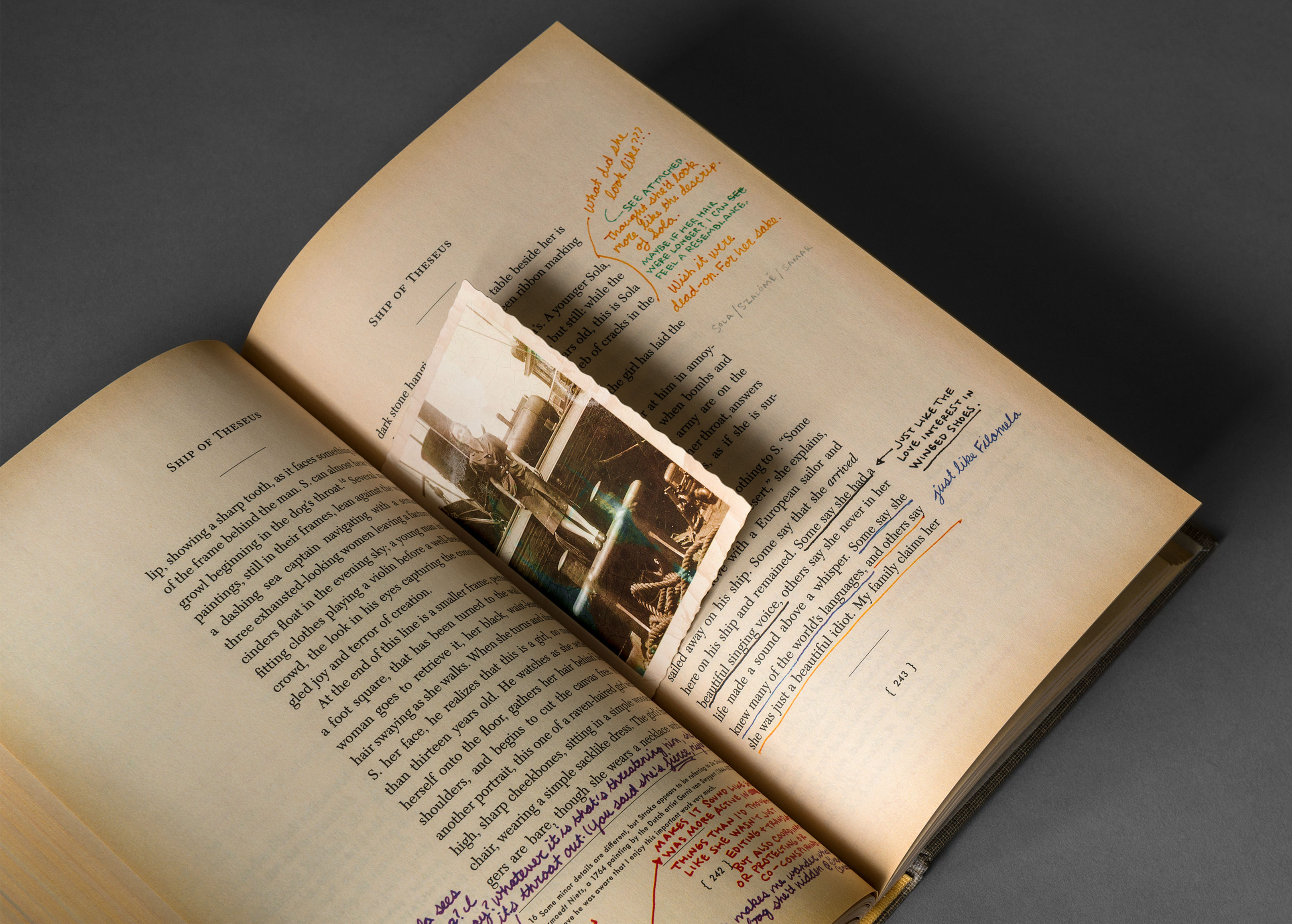
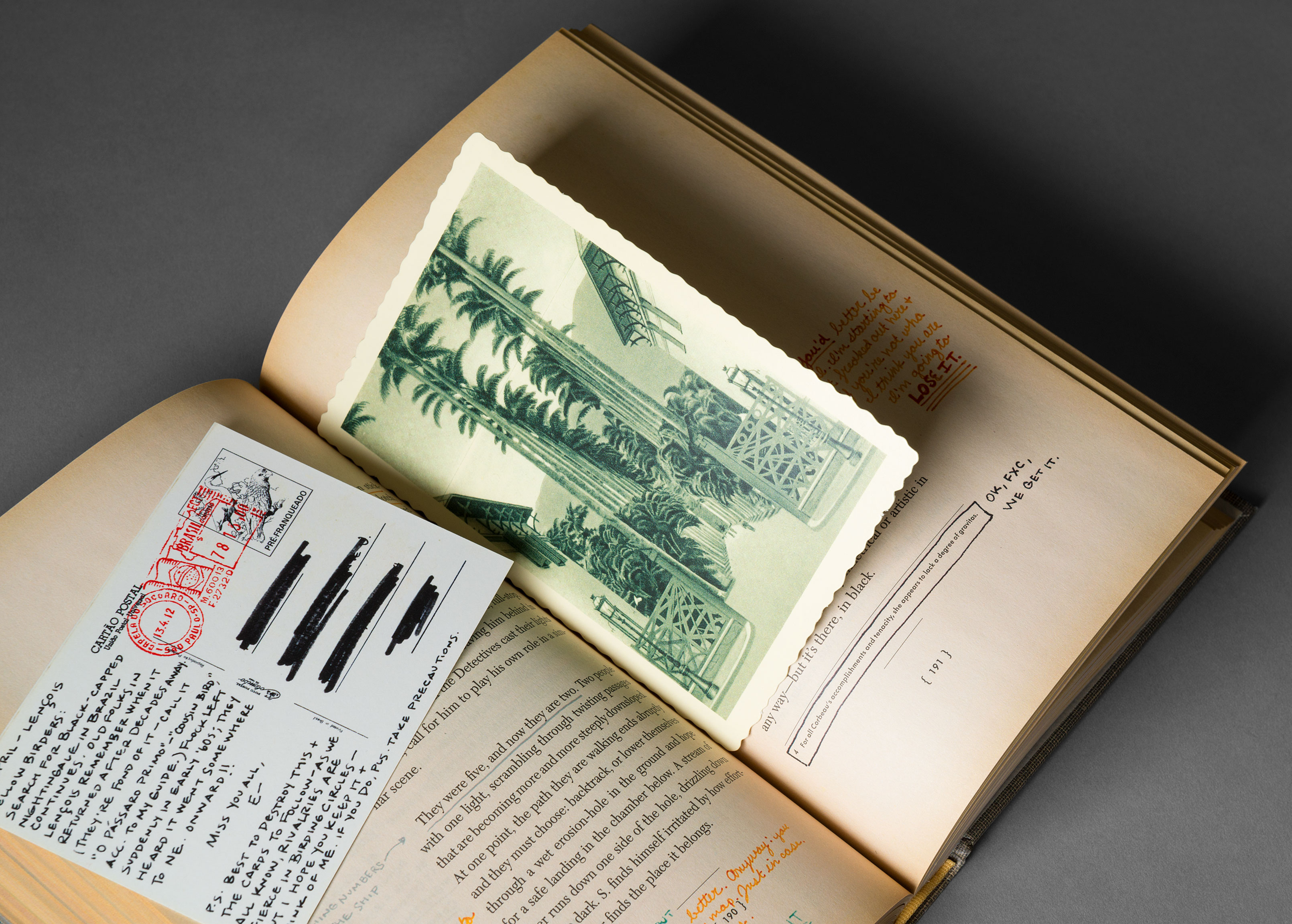
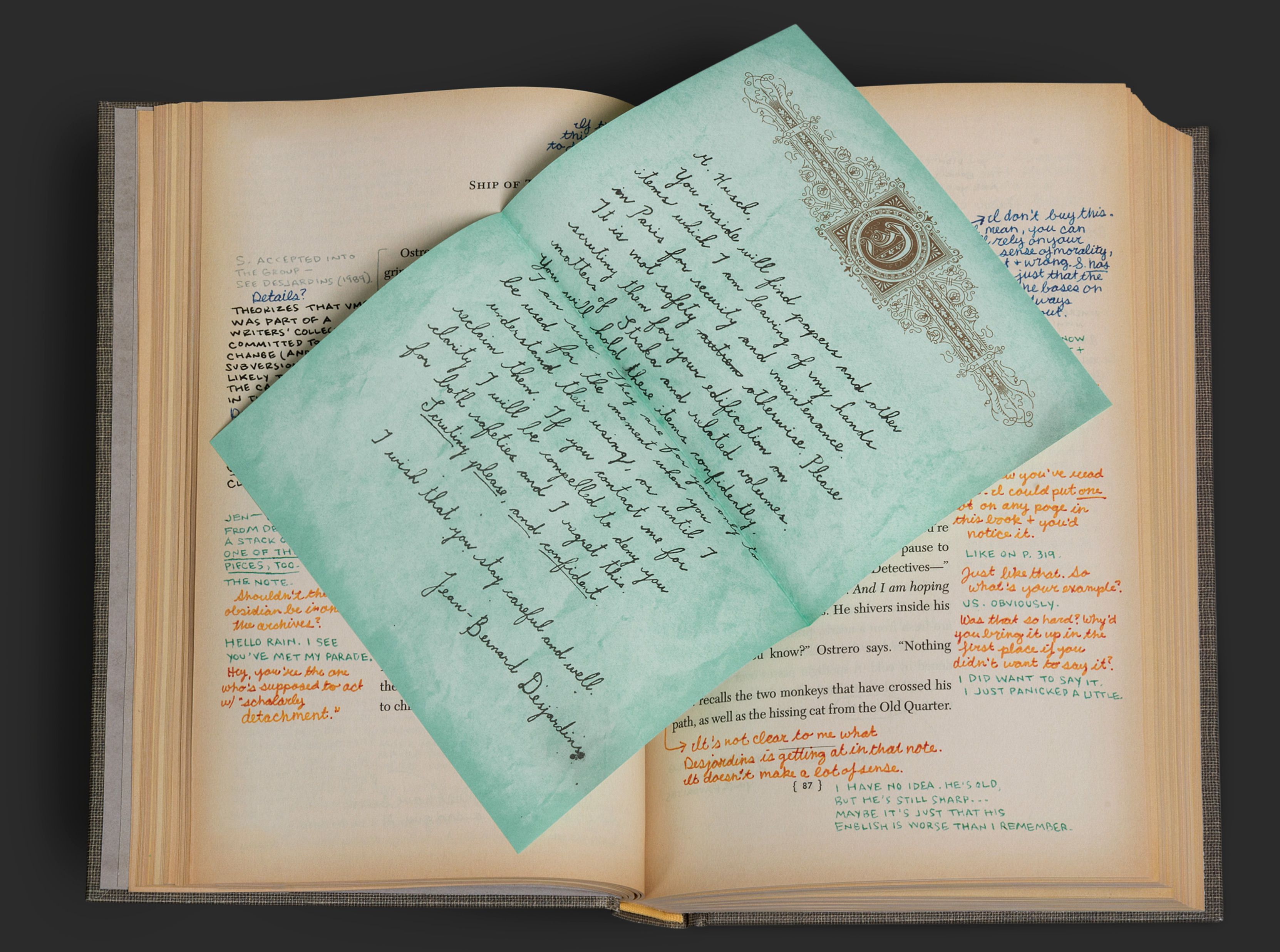
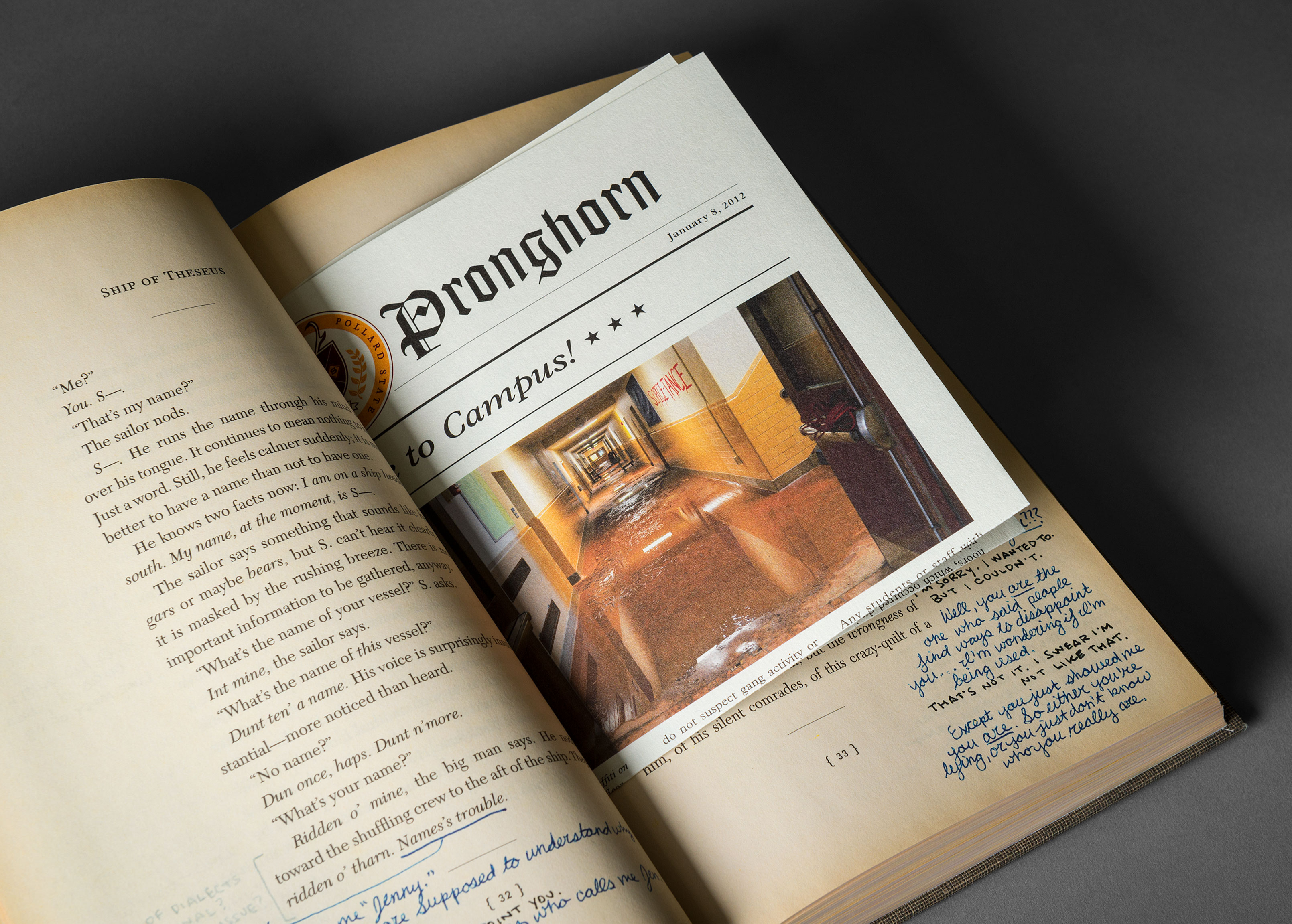
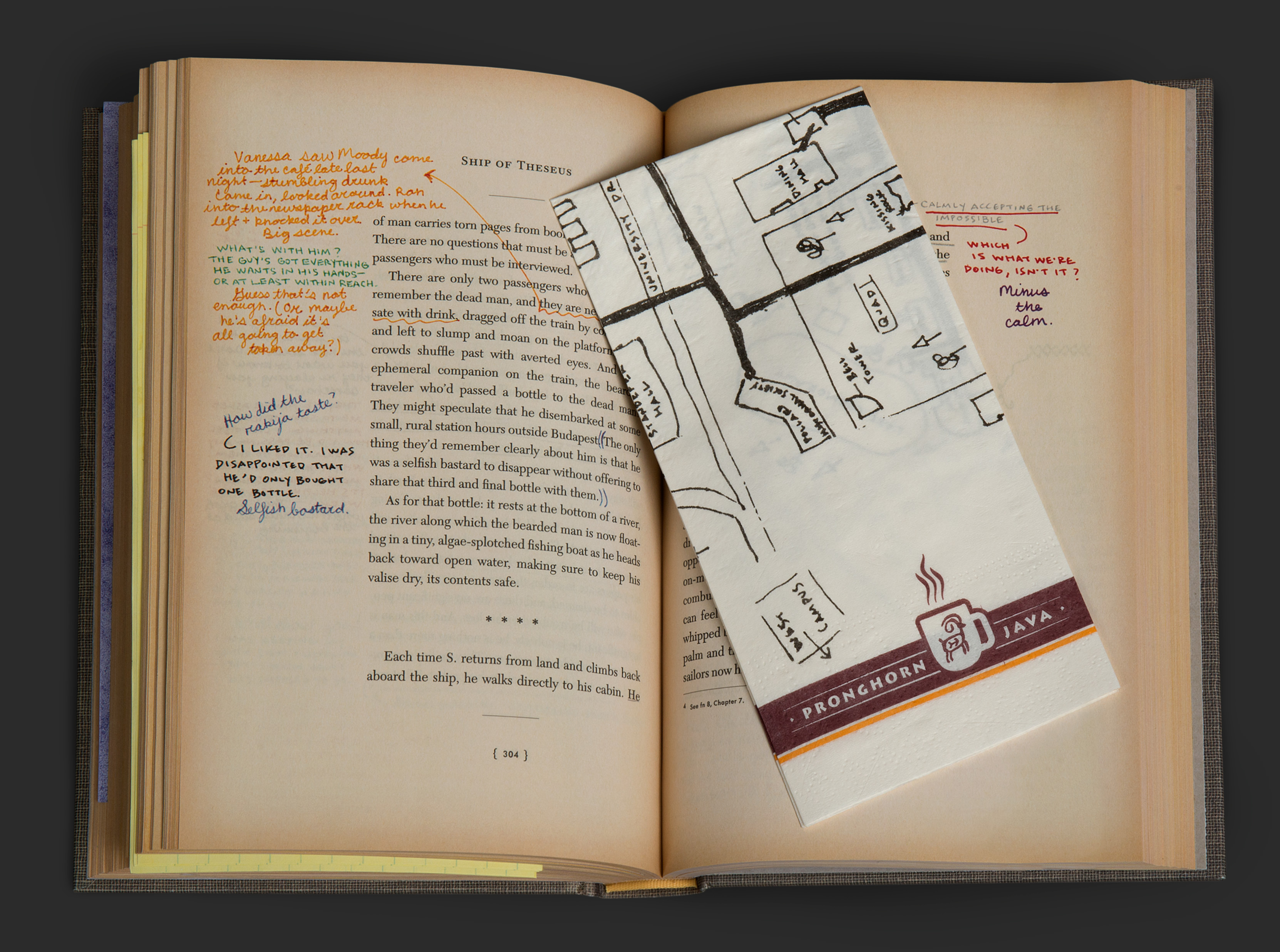
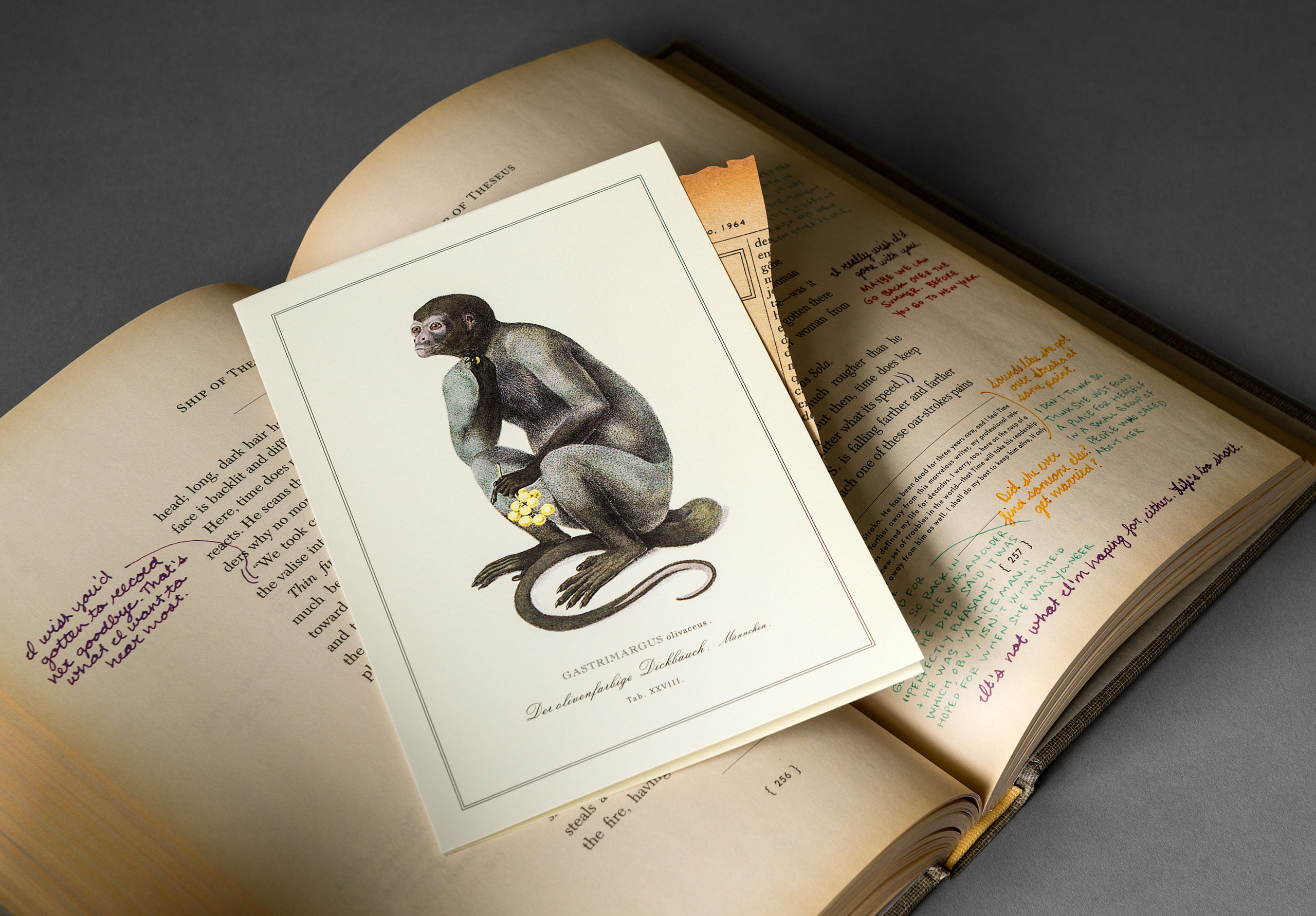
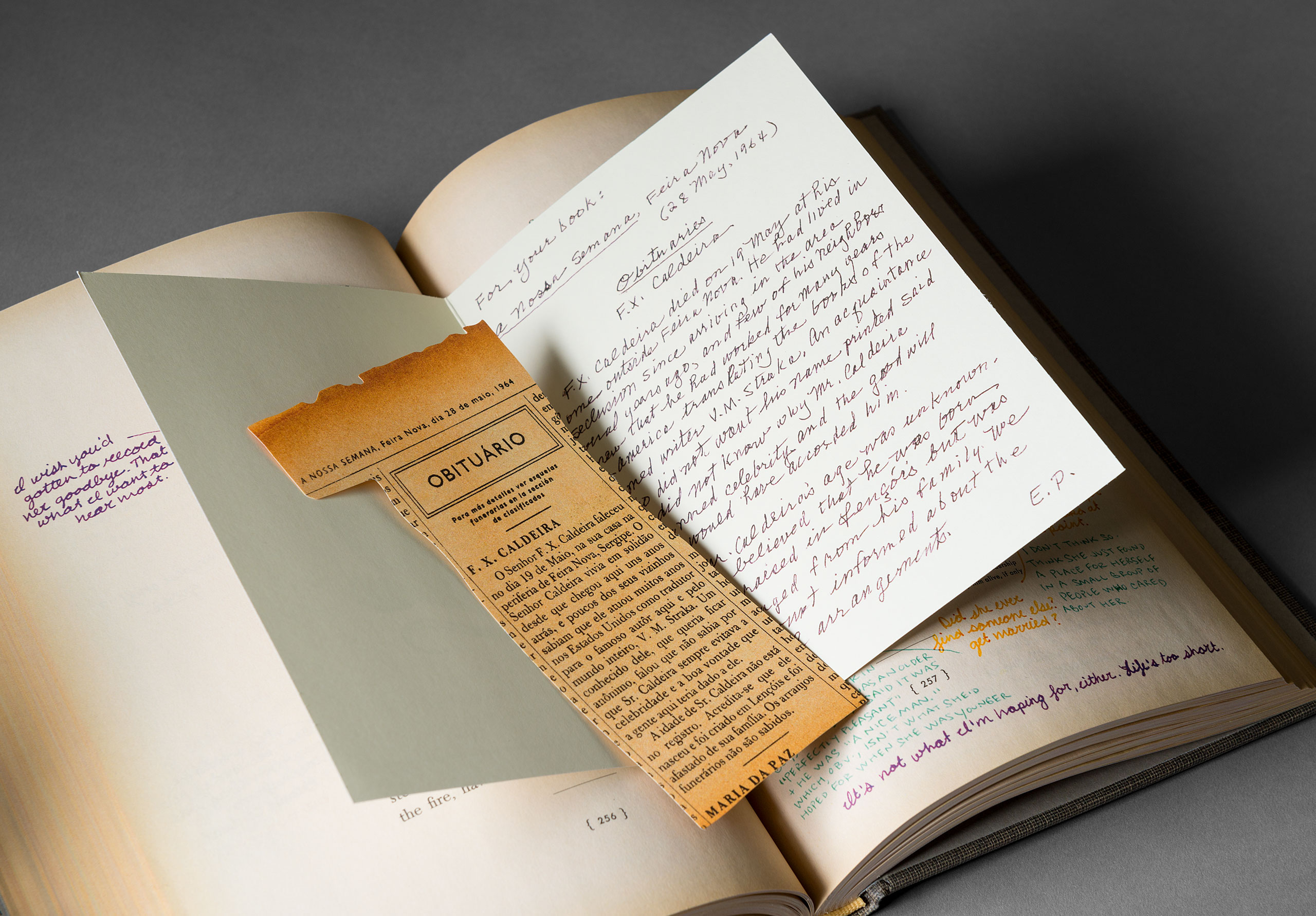
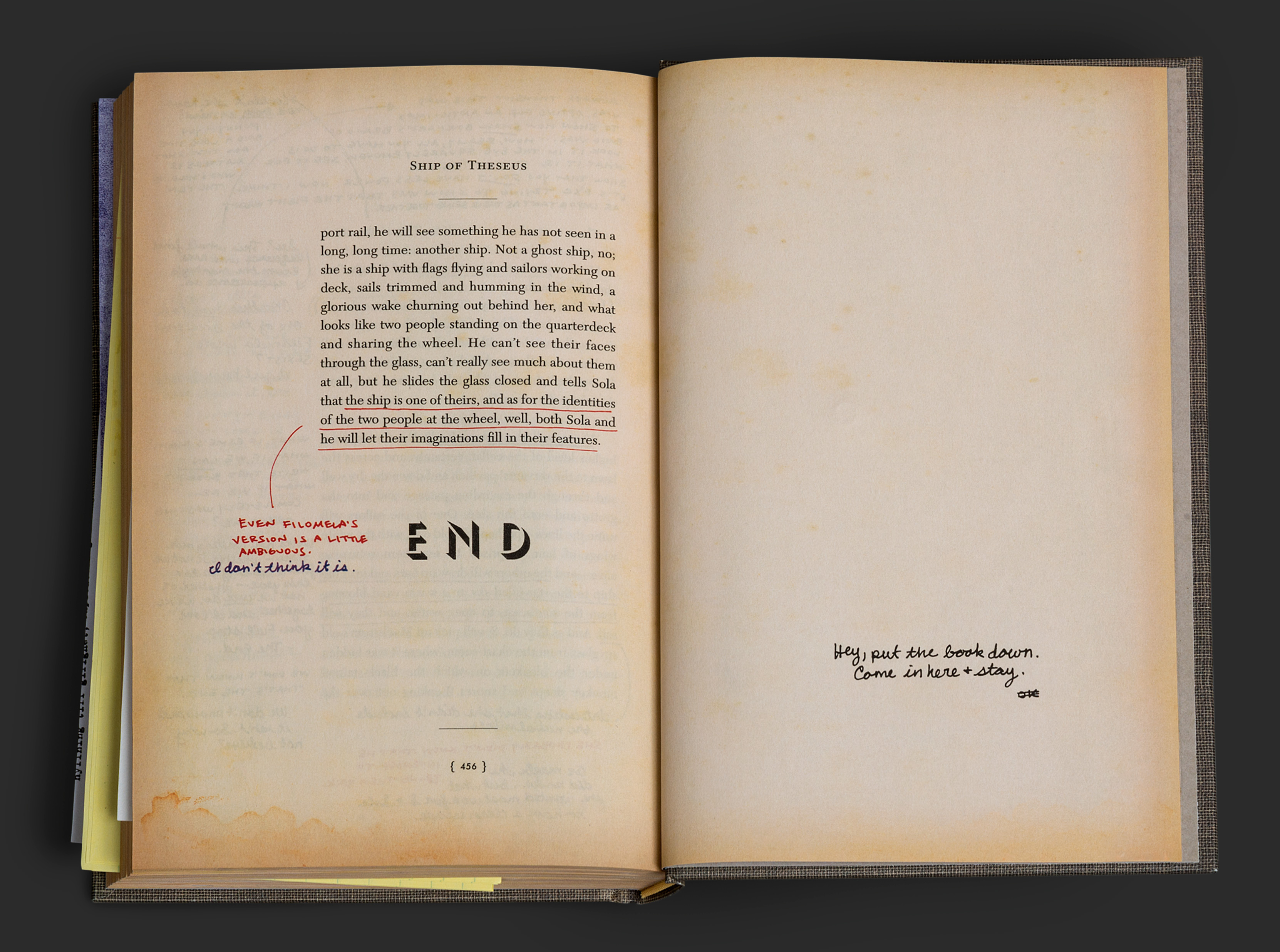
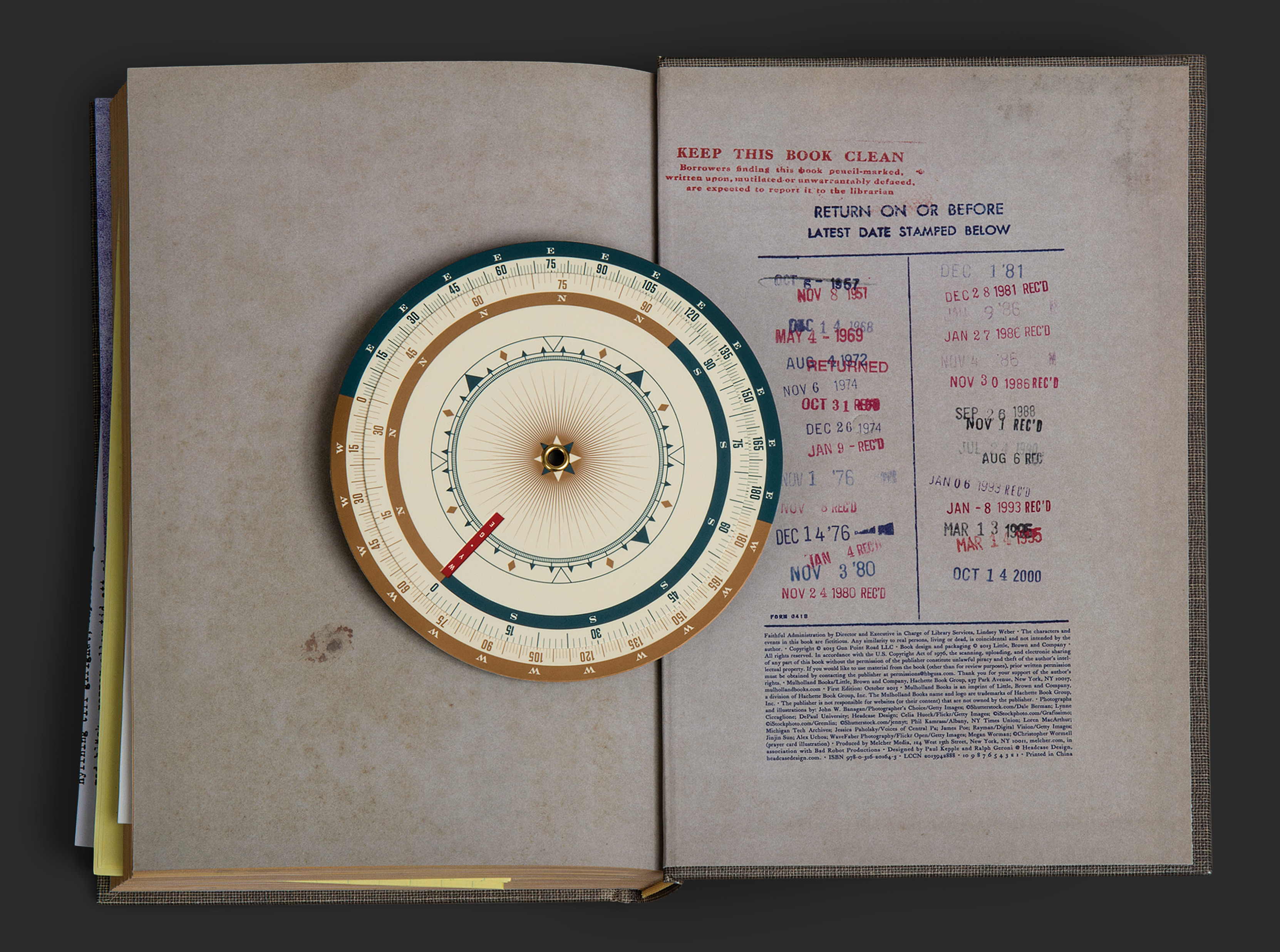
A mysterious decoder wheel motivates the reader to search for hidden messages sprinkled throughout the book. J. J. Abrams was adamant about keeping the experience as realistic as possible for the reader so they become immersed in the Meta world of the novel. Each piece of ephemera was printed on the most realistic paper stock possible — newsprint for the campus newspaper, bible paper, card stocks for the postcards, and an actual paper napkin.